
Carrier screening for severe recessive Jewish genetic disorders
Jnetics works in conjunction with the NHS to provide the UK Jewish community with accessible, responsible and affordable carrier screening for the 9 most severe recessive Jewish genetic disorders.
Appointments take place via our ‘virtual service’.
This is currently not just for National but also London based clients.
Please book your appointment in the regular way and we will post a virtual screening pack (including sample kit) to you in advance of your appointment.
The genetic counsellor will call you at the appointment time for a phone or video consultation and give you instructions about providing your sample and posting it to the lab.
Which conditions do we focus on?
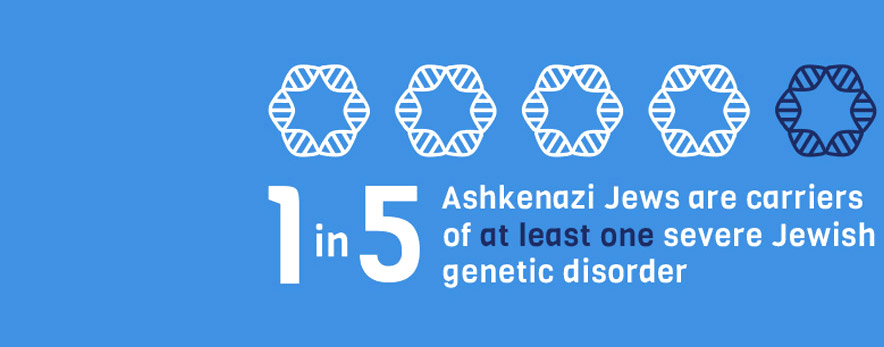
We are primarily interested in genetic conditions affecting people with Ashkenazi Jewish ancestry. We do focus on a few conditions affecting people with Sephardi ancestry too (from early 2021 the number of Sephardi conditions we focus on will increase).
The conditions we are interested in fall into two categories: a) ‘Higher prevalence ‘Jewish genetic disorders and b) Disorders with higher prevalence ‘Jewish’ mutations.
Why are certain disorders more common among Jewish people?
Many years ago, Jewish communities were small and isolated, with members tending to marry within their communities. A small number of people over many, many generations can pass on a DNA abnormality within an ethnic community, even when that community is no longer small and isolated. For this reason, most ethnic groups have genetic disorders which are more common in that population than in the rest of the world.
How many Jewish genetic disorders are there?
The answer is changing all the time as new discoveries are made. At the moment, scientists and doctors have studied and identified in detail over 30 conditions which are particularly relevant to people who have Jewish ancestry. Some particularly affect those of Sephardi ancestry and some particularly affect those of Ashkenazi ancestry.
Do all Jewish people have the same likelihood of having these disorders?
Jewish people can usually trace their origins back to either Ashkenazi or Sephardi roots, or to both. Ashkenazi Jews are at risk from a different group of genetic disorders than those affecting Sephardi Jews.
Sephardi disorders also tend to be specific to community of birth and do not affect all Sephardi Jews to the same extent. This means that disorders that are more common among Sephardi Jews from one region e.g. Tunisia tend to differ from those that are more common among Sephardi Jews from other areas e.g. Syria and Morocco.